A damaged garage door spring can leave your vehicle inside the garage, prevent safe entry to your home, and put additional stress on the garage door opener. In Los Angeles, homeowners often seek reliable garage door repair after hearing a sharp popping noise or discovering that the garage door will not open. A failed spring is a common cause, but the problem may also involve a garage door cable, rollers, door tracks, or the opener itself.
This guide describes how to recognize a broken garage door spring, why spring replacement is a job for a trained professional, what the repair process includes, and how garage door repair pricing is determined in Los Angeles and Los Angeles County.
How to Know When a Garage Door Spring Is Broken
The most obvious sign of a broken garage door spring is a garage door that becomes extremely difficult to lift. You may hear a loud popping sound as the spring breaks, although some failures happen quietly. If the garage door will not open with the wall button or remote, check whether the opener motor is operating as expected and whether the door itself feels abnormally heavy.
Typical broken garage door spring symptoms include:
EM Garage Doors And Gate Service Inc19629 Cantara St, Reseda, CA 91335
(818) 919-0785
https://emgaragedoorsandgateservice.com/
https://maps.app.goo.gl/XujLWxA4pAQKARQT8
34.2193569, -118.5613022
- The garage door is trapped in the closed or partially open position. The door feels difficult to lift when you try to lift it manually. The door rises a few inches and then will not continue. One side of the door appears out of alignment than the other, creating an misaligned garage door. A visible gap can be seen in the spring. A garage door cable has detached or is hanging beside the door. The opener runs, but the door does not move correctly.
Most residential doors use either a torsion spring or extension springs. A torsion spring is mounted across the width of the garage above the closed door and uses stored twisting force to lift the door. An extension spring is positioned along the horizontal tracks and stretches as the door opens and closes. Extension spring systems should be equipped with a safety cable because a failed spring can move with considerable force through the garage.
A broken spring can also make a fully operational garage door opener appear defective. The opener is designed to operate and manage the door, not carry the full garage door weight. Continuing to operate the opener when the spring has failed may damage its gears, drive system, or mounting hardware.
Why Broken Garage Door Springs Need Qualified Repair
Garage door springs contain substantial mechanical energy. Even after a spring seems broken, the leftover parts of the system may still contain dangerous spring tension. Removing, winding, or installing a spring without the proper tools and training can cause severe injury to hands, arms, face, or other parts of the body.
The garage door weight also creates a major hazard. A residential door may weigh many hundreds of pounds, and the spring system is responsible for counterbalancing that load. If a cable slips, a bracket fails, or the door is inadequately supported, the door can fall unexpectedly. Do not attempt to force open a garage door that is stuck or disconnect the opener without understanding how to properly support the door.
A qualified trained garage door specialist can identify whether the failure involves the spring, cable drums, rollers, hinges, tracks, or another component. The technician can also confirm that the safety wire cables are correctly installed on extension spring systems. These cables pass through the springs and help control movement if a spring breaks.
For safety, avoid standing beneath a partially open door, pulling on a loose garage door cable, or using improvised tools to wind a torsion spring. Keep children and pets away from the area and disconnect the opener only when the door is securely supported and a professional advises you to do so.
Garage Door Spring Installation Process
Qualified garage door spring replacement begins with a complete spring inspection. The technician examines the failed spring, spring brackets, bearing plates, cables, drums, rollers, hinges, tracks, and opener connection. This inspection identifies whether the spring failed because of ordinary wear or whether another issue, such as corrosion, binding, or poor door balance, contributed to the problem.
The technician then identifies the proper replacement spring. Springs are selected based on the garage door’s size, weight, height, lift configuration, and existing hardware. A spring that is too weak will not properly counterbalance the door, while an incorrectly strong spring can create dangerous operating pressure and premature wear.
For a torsion spring system, the technician carefully stabilizes the door, releases the remaining tension with professional winding tools, removes the damaged components, and installs the correctly sized spring. With extension spring replacement, the technician checks the spring arrangement, safety cables, pulleys, and track alignment before installing proper replacement parts.
After installation, the technician performs a garage door balance test. The door should remain near the middle of its travel when lifted manually and should move smoothly without dropping, drifting upward, or becoming unusually heavy. The opener is then tested to ensure that the force and travel settings are emgaragedoorsandgateservice.com appropriate.
Lubrication is another important step. Hinges, rollers, bearings, and other moving points may require the correct garage door lubricant. Lubrication should not be used to conceal worn components, but it can reduce friction and support preventive maintenance. In Los Angeles, the generally mild, dry climate means seasonal temperature extremes may be less severe than in colder regions, but garage doors still need periodic inspection and lubrication.
Homes near the Los Angeles coast, including Santa Monica, Venice, and Long Beach, may be exposed to salt-laden air and higher humidity. Over time, these conditions can contribute to corrosion on exposed metal hardware, cables, springs, brackets, and fasteners. A regular garage door inspection can identify corrosion before it becomes a larger performance issue.
Garage door coil expense in Los Angeles
The garage door spring cost in Los Angeles depends on the spring system, door size, replacement parts, accessibility, and the condition of related hardware. A basic spring service may be less expensive than a repair that also requires cables, rollers, bearings, brackets, or opener adjustments. The final garage door repair cost should be based on the actual condition of the door rather than a general flat-rate promise.
Garage door repair pricing commonly includes labor and materials. Labor cost may vary based on technician availability, time of day, travel distance, and how complicated the installation is. A standard appointment during normal business hours may have a different price from same-day garage door service requested at night, on a weekend, or during a holiday.
When comparing estimates, ask whether the quoted garage door torsion price includes removal of the broken component, installation of the new spring, safety testing, lubrication, adjustment, and disposal. A very low initial price may not include necessary replacement parts or may cover only one portion of the work.
What Determines the Cost of Spring Replacement?
Door size is one of the main cost drivers. A single-car door usually requires different components from a wider residential door. A larger door may be heavier and may use two springs or a higher-capacity spring system.
Spring type also affects the work involved. Torsion spring repair and extension spring replacement use different hardware, tools, and procedures. The correct spring must match the door’s actual weight and lift configuration, not simply its visual appearance.
Door weight, insulation, window inserts, and decorative hardware can affect the required spring capacity. If the door is unusually heavy or has been modified, the technician may need to recalculate the system rather than install a spring based on the old part alone.
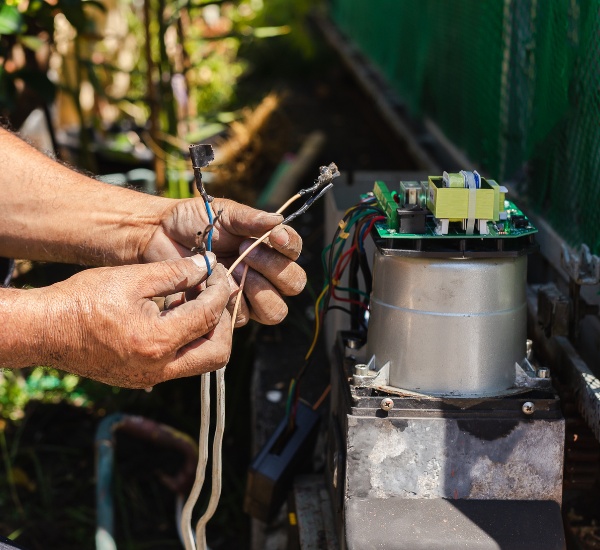
Service timing can affect the total price. Same-day service may be beneficial if the garage door is jammed, the vehicle is trapped, or the opening cannot be secured. However, check beforehand whether emergency or after-hours charges apply. A reputable company should explain labor cost, materials, dispatch fees, and any additional charges before beginning work.
Garage Door Replacement Cost Versus Repair
Spring replacement is usually much less expensive than replacing an entire door. A spring failure does not automatically mean that the overhead garage door has come to the end of its service life. If the sections, frame, door tracks, and hardware are in solid condition, spring replacement may return safe operation.
The garage door replacement cost is higher because it can involve a new door, tracks, rollers, hinges, brackets, weather seals, installation, removal, and disposal of the old system. A damaged garage door panel may be replaced separately when the remaining sections are still structurally strong and a matching panel is available.
Homeowners often look up the 2 car garage door replacement cost or two car garage door replacement cost. A wider two-car door generally costs more than a single-car door because of its size, weight, materials, and installation requirements. However, the exact price depends on whether the door is steel, wood, aluminum, composite, insulated, custom-sized, or fitted with windows and upgraded hardware.
If an entire door is being replaced, confirm local permit and code requirements with the City of Los Angeles or the relevant Los Angeles County jurisdiction. Permits or additional requirements may apply when replacing the opening, changing structural elements, modifying framing, or performing other structural work.
Deciding Whether to Repair or Replace an Overhead Garage Door
Repair is often sensible when the residential garage door has one isolated problem, such as a damaged spring, used roller, damaged hinge, loose cable, or malfunctioning opener. A professional can inspect the door and tell you whether the overall structure remains safe and in working condition.
Replacement may be more practical when multiple important parts are wearing out at once. Serious rust, repeated spring failures, misaligned door tracks, split sections, damaged mounting points, or substantial deterioration of the garage door hardware can make continued repairs less economical. A badly damaged garage door panel may also impact alignment and proper operation.
Consider the door’s age, record of maintenance, appearance, insulation performance, and security features. If repair costs are approaching the value of a new door, ask for both options in writing. A reputable technician should explain the advantages and limitations of each choice without pressuring you into unnecessary replacement.
Finding Garage Door Repair Near Me in Los Angeles
Looking for garage door repair near me or garage door spring replacement near me can generate many businesses, but location by itself does not guarantee quality. Look for a company that plainly states its local service area, provides a physical business identity, and sends a licensed and insured technician when required for the work.
Los Angeles has a wide service area, so response times can vary between Hollywood, Pasadena, the San Fernando Valley, Long Beach, and other communities. Traffic, appointment volume, and the availability of replacement parts may influence arrival times. Ask when a technician is expected to arrive and whether the quoted price includes travel or dispatch charges.
For a serious failure, request emergency garage door repair if the door cannot be secured, is leaning dangerously, or blocks access to a vehicle. Until help arrives, keep people away from the door and do not attempt to lift or lower it manually. Same-day garage door service may be available, but check the scope and price before authorizing work.
Choose a provider that offers a proper garage door inspection rather than replacing a spring without checking the rest of the system. The technician should examine cables, drums, rollers, tracks, hinges, brackets, weather seals, and opener operation. This approach can help avoid a new spring from being installed on a door with an underlying alignment or weight problem.
Important Questions to Ask Before Hiring a Residential Garage Door Company
Before authorizing garage door repair, ask for a thorough written quote. It should specify the failed components, suggested replacement parts, labor and materials, service fees, taxes when applicable, and any extra recommendations. Ask whether the estimate can change if unseen damage is found and insist on approval before further work begins.
Ask what warranty covers the spring, other replacement parts, and workmanship. A service warranty may cover different items for different periods, so request the terms in writing. Determine whether the warranty is provided by the company, the parts manufacturer, or both.
Verify that the company carries adequate insurance and that the technician is suitably trained for the work. Depending on the job and jurisdiction, licensing requirements may apply. Feel free to ask for the business name, license information where applicable, and proof of insurance.
Examine reviews from customers for recurring themes rather than focusing on one comment. Pay attention to feedback about precise quotes, being on time, safety practices, cleanup, warranty handling, and whether customers were pushed toward replacing equipment unnecessarily. A qualified company should describe the repair, answer questions, and provide documentation after completion.
Finally, ask whether the technician will conduct a door balance test, check the safety reverse function, inspect the opener connection, oil appropriate components, and remove old parts. These details help distinguish complete garage door repair from a simple component swap.
Common Questions
How much does garage door repair cost in Los Angeles?
Garage door repair cost in Los Angeles varies according to the failed component, labor cost, time of service, replacement parts, door size, and accessibility. Spring work, cable repairs, roller replacement, panel repairs, and opener service each have unique requirements. Ask for a written estimate that details labor, materials, dispatch fees, and optional work.
How much does garage door spring replacement?
Garage door spring replacement cost varies based on whether the system uses a torsion spring or extension spring, the door’s weight and size, the number of springs, and whether cables or other hardware are damaged. Same-day service or emergency appointments may have added costs. A technician should inspect the system and provide garage door repair pricing before beginning the work.
Is it possible for me to replace a broken garage door spring myself?
DIY spring replacement is not recommended. A broken garage door spring can retain substantial stored tension, and the door’s weight can cause significant harm if it falls or shifts. Torsion spring repair and extension spring replacement require specific tools and the right procedures. Have a qualified garage door technician handle the work and test door balance afterward.
How much time does garage door spring replacement take?
Many straightforward spring replacement appointments can be completed during a single visit, but the exact spring replacement time depends on the door system, access, corrosion, damaged cables, track problems, and replacement part availability. A technician should inspect the door first and explain the expected duration before commencing.
Should I repair my overhead garage door or replace it?
Repair is generally reasonable when the overhead garage door has one repairable failure and the panels, tracks, frame, and hardware remain in good condition. Replacement may be a better option when the door has extensive corrosion, repeated failures, severe panel damage, unsafe tracks, or multiple aging components. Compare the repair estimate with the garage door replacement cost, and confirm any local permit or code requirements before structural work.